
Top videos


Open Road Auto Concierge LLC was created – to bring simplicity, honesty, and efficiency to the process. As a leading professional car buying service Ventura, we specialize in taking the hassle out of car buying so you can focus on what matters most: finding the perfect vehicle for your needs. We work exclusively on your behalf, guiding you through every step of the buying process. From identifying the right vehicle to negotiating the lowest possible price, our expertise ensures you’ll feel confident and supported at every stage.
Open Road Auto Concierge LLC
2194 Anthony Dr. Ventura, CA 93003
(800) 917-6912
My Official Website: https://www.openroadac.com/
Google Plus Listing: https://www.google.com/maps?cid=524229414736411380
Our Other Links:
professional car buying service Ventura: https://www.openroadac.com/auto-buying-service/
law enforcement car buying Ventura: https://www.openroadac.com/leo/
Service We Offer:
White Glove Concierge service
Auto Concierge Services
Medical/Dental Professionals
Car-Buying For Legal Professionals
Follow Us On:
Linkedin: https://www.linkedin.com/pub/d....orian-gunn/107/3b6/b
Instagram: https://www.instagram.com/openroadac/
Twitter: https://twitter.com/OpenRoadAC
Facebook: https://www.facebook.com/Open-....Road-Auto-Concierge-


If you’ve been searching for a reliable car accident lawyer Tavernier, look no further than Gonzalez P.A. Tavernier Attorney. With our blend of legal knowledge, dedication, and client-centered service, we are ready to stand by your side and fight for the justice you deserve. Our compassionate team works tirelessly to provide not only legal representation but also peace of mind during one of the most difficult times in your life.
Gonzalez P.A. Tavernier Attorney
91760 Overseas Hwy, Tavernier, FL 33070
(786) 429-1511
Official Website: https://agonzalezlaw.com/lawyer-tavernier/
Google Plus Listing: https://www.google.com/maps?ci....d=884814375266597033
Other Service We Provide:
personal injury attorney
lawyer
attorney
boat accident lawyer
boat accident attorney
slip and fall attorney
slip and fall lawyer
cruise ship attorney
car accident lawyer
immigration lawyer
immigration attorney
business lawyer
maritime attorney
Follow Us On
Twitter: https://x.com/Gonzalezpataver
Pinterest: https://www.pinterest.com/gonzalezpatavernier/
Linkedin: https://www.linkedin.com/compa....ny/gonzalez-p-a-tave
Facebook: https://www.facebook.com/peopl....e/Gonzalez-PA-Tavern
Instagram: https://www.instagram.com/gonzalezpatavernier/

Europe is a treasure trove of incredible travel experiences, which can make deciding where to go a challenging task indeed. Thankfully Lonely Planet’s travel experts have been on the case to bring you the best spots to add to your bucket list for 2017. What made it to the top spot? Our Destination Editor, Anna Tyler, reveals all...
Find out what other destinations mades the list here: https://www.lonelyplanet.com/best-in-europe
Tell us what you think about the list on Facebook (https://www.facebook.com/lonelyplanet) or Twitter (@lonelyplanet)
Find out more about our top destination here: https://www.lonelyplanet.com/croatia/zagreb



![Cascada - Everytime We Touch (Klutch Remix) [BassBoosted]](https://playtubescript.fra1.cdn.digitaloceanspaces.com/upload/photos/2019/04/JuWzWIMdugC6ryLoky4B_13_f78299008ff987b7becbd5c3e9ae0c21_image.png)

Remix now with proper bass boost & first visualized audio. Enjoy.
Wanna support me? Feel free to LIKE & SHARE! And maybe leave a comment. :)
Free download: https://goo.gl/3pmPRA
SoundCloud: https://soundcloud.com/legitti..../everytime-we-touch-
Everytime We Touch 8bit Remix: https://youtu.be/fvdk8CNJPxI
Do not use my music without my permission, you can find my contact details down below.
Please don't use my music without my permission, you can find my contact details down below.
https://legitti.com
https://twitter.com/Legitti
https://soundcloud.com/legitti


Best Produções Artísticas
Produção Musical: Neguim (Pacificadores)
Instagram: @hungria_oficial
Twitter: @HungriaOficial
Download: http://palcomp3.com/hungriahiphop
Ouça-nos nas principais plataformas: https://ONErpm.lnk.to/HungriaHipHop
Inscreva-se : http://youtube.com/OficialHungria
Facebook: https://www.facebook.com/hungriaoficial
Site: http://hungriahiphop.com.br
Foi difícil entender que esse tempo é nada
Mas foi fácil viver aonde eu sempre quis
Foi difícil entender que o muito dura pouco
E às vezes o pouco faz muita gente feliz
Com o fruto do suor, joguei dez mil de som
Com o fruto da conversa, eu beijei a melhor
Colecionei carros da Hot Wheels
Viajava jogando Need for
Preciso de tão pouco pra sorrir
Mesmo sem visitar a Disneylândia
Eu não troco por duas Miami ou Paris
A metade da minha Ceilândia
Aumenta esse grave
E avisa na rua que só desligo de manhã
Mas fica à vontade
E acende um narguilé com aquele cheirin de hortelã
E topa esse som desse Golf sapão
Quem for trabalhar, vai virado
Se um dia a Ferrari entrar no portão
Não esqueço do meu Gol quadrado
Sonhei há muito tempo com isso aqui, né neguin?!
Cê lembra nós no tapete da sala?
Minha mãe só me falava em acordar cedo
E a gente só sonhava com os Opala
Querendo as melhores da quebrada
Querendo andar de Golf GTI
Pensava que o mundo era tão grande
Mas hoje sei que é pequeno pra mim
Foi difícil entender que esse tempo é nada
Mas foi fácil viver aonde eu sempre quis
Foi difícil entender que o muito dura pouco
E às vezes o pouco faz muita gente feliz
Com o fruto do suor, joguei dez mil de som
Com o fruto da conversa, eu beijei a melhor
Colecionei carros da Hot Wheels
Viajava jogando Need for
Preciso de tão pouco pra sorrir
Mesmo sem visitar a Disneylândia
Eu não troco por duas Miami ou Paris
A metade da minha Ceilândia
Aumenta esse grave
E avisa na rua que só desligo de manhã
Mas fica à vontade
E acende um narguilé com aquele cheirin de hortelã
E topa esse som desse Golf sapão
Quem for trabalhar, vai virado
Se um dia a Ferrari entrar no portão
Não esqueço do meu Gol quadrado
Alma de moleque, só pensa em Chevette
Até presenciei Caloi 2000 virar Hornet
E hoje nós investe, tá sobrando amor
Mostrar pra esses - que favelado tem valor
E hoje só grave sobrou, é gelo no isopor
Uma cerva gelada faz um bem nesse calor
É que o moleque mora longe, mas mora onde o sorriso é mais feliz
Parece que foi ontem os rolezin de Honda Biz
Foi difícil entender que esse tempo é nada
Mas foi fácil viver aonde eu sempre quis
Foi difícil entender que o muito dura pouco
E às vezes o pouco faz muita gente feliz
Com o fruto do suor, joguei dez mil de som
Com o fruto da conversa, eu beijei a melhor
Colecionei carros da Hot Wheels
Viajava jogando Need for
Preciso de tão pouco pra sorrir
Mesmo sem visitar a Disneylândia
Eu não troco por duas Miami ou Paris
A metade da minha Ceilândia
Aumenta esse grave
E avisa na rua que só desligo de manhã
Mas fica à vontade
E acende um narguilé com aquele cheirin de hortelã
E topa esse som desse Golf sapão
Quem for trabalhar, vai virado
Se um dia a Ferrari entrar no portão
Não esqueço do meu Gol quadrado
CONTRATE
showsbest@gmail.com
Tim: (11) 9 8196 0396




Specialty Care Rx delivers trusted infusion therapy for Rheumatoid Arthritis Plano in a comfortable, professional setting. Our dedicated team ensures each infusion is administered safely while monitoring patient response closely. We collaborate with healthcare providers to optimize outcomes and minimize side effects.
Specialty Care Rx - Plano, TX
6200 Chase Oaks Blvd, Suite 102, Plano, Texas 75023
(469) 257-4200
My Official Website: https://myscrx.com/locations/s....pecialty-care-rx-pla
Google Plus Listing: https://www.google.com/maps?cid=398532442211676977
Other Services
Immune Globulin Therapy
Hemophilia & Bleed Disorders
Neuro-Muscular Disorders
Cancer
Rheumatology
Bone And Joint Disorders
Liver Disease & Gastroenterology



Advanced Sanitation provides dependable septic system pumping Ventura County homeowners and businesses can trust. Our experienced technicians use modern equipment to safely remove waste, prevent backups, and extend the life of your septic system. Whether you need routine maintenance or urgent service, we respond quickly and work efficiently to protect your property.
Advanced Sanitation
PO Box 3445, Camarillo, CA 93011
(805) 484-3282
My Official Website: https://www.advancedsanitation.com/
Google Plus Listing: https://www.google.com/maps?ci....d=603147753274718312
My Other Links:
septic system install ventura county: https://www.advancedsanitation.com/septic-system-installation/
septic tank pumping ventura county: https://www.advancedsanitation.com/septic-tank-pumping/
Other Services
septic installation
septic system repair
septic tank inspection
septic system cleaning
Follow Us On:
Facebook: https://www.facebook.com/peopl....e/Advanced-Sanitatio


Waugs Electric Service is a trusted electrician Farmington MI delivering safe and reliable electrical solutions for homes and businesses. Our experienced electricians manage everything from minor repairs and troubleshooting to full system upgrades and installations. We prioritize safety, energy efficiency, and long-term performance in every service we provide.
Waugs Electric Service
22001 Colgate St, Farmington, Michigan 48336
(248) 563-4013
My Official Website: https://waugselectric.com/
My Other Links:
residential electrician farmington hills: https://waugselectric.com/residential-electrician-farmington-hills-mi/
commercial electrician farmington hills mi: https://waugselectric.com/commercial-electrician-farmington-hills-mi/
Other Services
Electrician
Residential Electrician
Commercial Electrician
Follow Us On:
Facebook: https://www.facebook.com/waugelect/
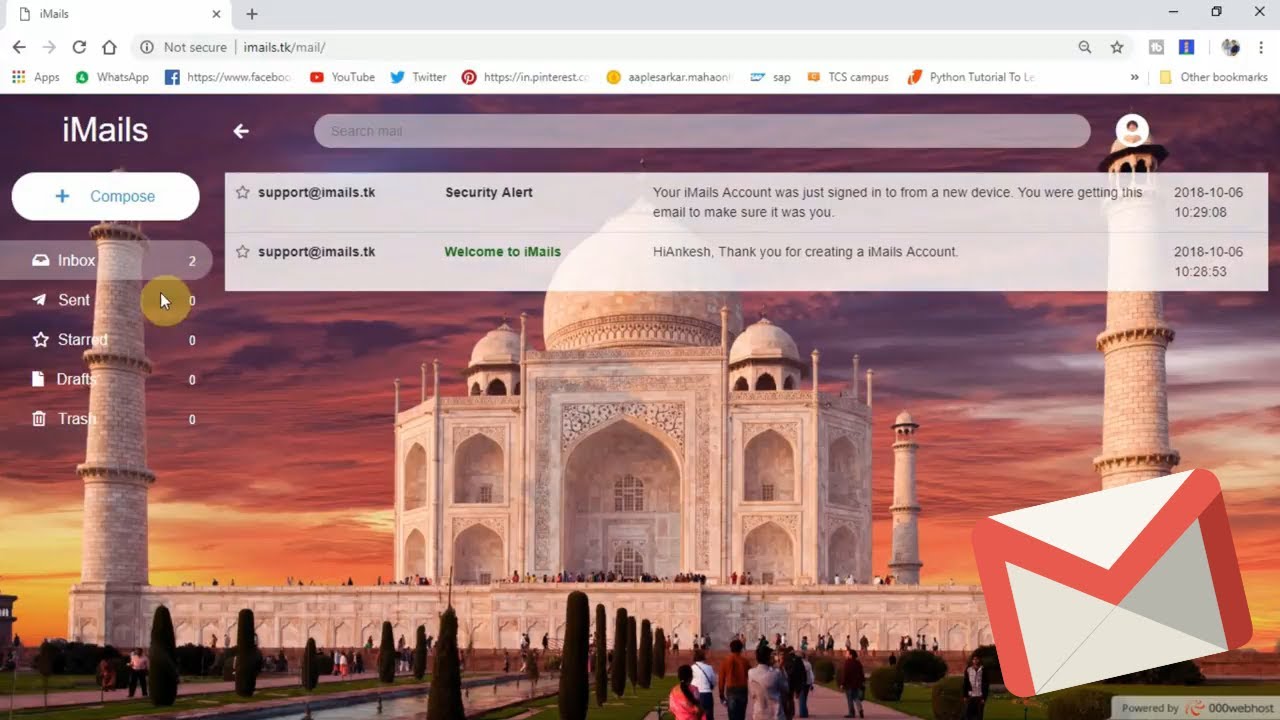
#iMails #iMail #mailingSite
We all have a question in mind, How Google has made a Gmail Website?
So I've discovered a simple way for creating a Gmail-like website.
I hope you will enjoy..!
In this video i'm going to show the website which we created.
iMail is a website for email servicing. you can send and receive mail to each other. You can save mail as draft also...
******* Focus Features ********
1. Keep log of Device Activity & Security Events
2. System generated mails for security alerts like login successfully , login failure and sign out etc.
3. Live search box.
4. Customization of themes or wallpapers.
5. Able to customize other details.
I created this website using PHP, Ajax, Bootstrap ,Mysql HTML5 and CSS3 etc.
To get projects like this one, please subscribe our channel and FB Channel also
or
Code: - https://github.com/ankesh06g/i....Mails-The-Mailing-Si
~~~~~~~~~~~~Do not forget to follow us on~~~~~~~~~~~~
1. Facebook : https://www.facebook.com/InvertBitt
2. twitter : https://twitter.com/InvertBitt
3. google+ : https://plus.google.com/1169712914384
4. GitHub : https://github.com/ankesh06g
5. LinkedIn : https://www.linkedin.com/in/ankesh-gaikwad
~~~~~~~~~~~~~~~Some useful videos~~~~~~~~~~~~~~~
1: What is Python?
https://youtu.be/rC68NAhyD4M
2: Setting up Environment and executing program
https://www.youtube.com/watch?v=Ca0YE...
3.Variable print function and comment
https://www.youtube.com/watch?v=VLv3o...
4.Python String
https://youtu.be/yXN1mEbJlxw
5.stack and queue in python
https://youtu.be/Oxi17ly89aU


- Что-то давненько у нас не было новостей от компании Ауди.
В последнее время этот производитель сконцентрировал все свое внимание на премьерах концептуальных проектов, но на них особо денег не заработаешь, да и глаз фанатов они радует лишь короткое время, после чего о них все забывают. Audi Q9, BMW X8 M
Видимо немцам это тоже поднадоело и они решили сделать небольшой информационный вброс связанный с новым поколением Ауди Q7. BMW X5 M Competition
- Новая Мазда CX60 обзавелась дизельным двигателем для рынка Европы. Японский производитель буквально сегодня опубликовал технические характеристики новой силовой установки представляющий себя дизельную рядную шестерку объемом в 3,3 литра.
- BMW объявила о завершении производства своего первого массово электромобиля. Речь идет о BMW i3 и в честь этого славного события компания выпустила прощальную партию из 10 уникальных машин.
► Instagram - https://www.instagram.com/the_king_drive/
► Tik Tok - https://www.tiktok.com/@the_kingdrive
The King Tech: https://www.youtube.com/channe....l/UC2TK7OiRQNS5BRp2J
The King Music: https://www.youtube.com/channe....l/UCQGABuFNamAcUeJFK
ПОДДЕРЖАТЬ КАНАЛ: https://www.donationalerts.com/r/the_king_drive
Cотрудничество и реклама: https://www.instagram.com/the_king_drive/
00:00 - Intro
00:10 - Audi
03:45 - Mazda
05:42 - BMW


The Stair Source stands out as a top stair parts supplier, providing high-quality products designed to elevate your staircase. Our wide range of stair components ensures you’ll find the perfect match for any style or design. As an experienced stair parts supplier, we prioritize durability and craftsmanship in every product.
The Stair Source
124 Rose Ln Ste 105, Frisco, TX 75036
(214) 843-3207
My Official Website: https://thestairsource.com/
Google Plus Listing: https://www.google.com/maps?ci....d=747075440898208498
My Other Links:
newel post: https://thestairsource.com/pages/newels
wood newel posts: https://thestairsource.com/collections/newels
iron newel post: https://thestairsource.com/collections/iron-newels
modern square newel post: https://thestairsource.com/collections/blank-newels
bending handrails: https://thestairsource.com/collections/handrail
handrail accessories: https://thestairsource.com/collections/handrail-accessories
handrail fittings: https://thestairsource.com/collections/handrail-fittings
iron balusters: https://thestairsource.com/collections/iron-baluster
modern plain square iron baluster: https://thestairsource.com/collections/modern-balusters
wood balusters: https://thestairsource.com/collections/wood-balusters
risers for stairs: https://thestairsource.com/collections/risers
moldings and trim: https://thestairsource.com/collections/moldings
Other Services
Stair Treads Supply (Red Oak, White Oak, Square Edge)
Newel Posts (Wood, Iron, Modern, Solid)
Stair Handrails & Bending Handrails
Handrail Fittings & Accessories
Iron Balusters & Wood Balusters
Stair Risers Supply
Stair Moldings & Trim
Stair Parts for Contractors
Stair Parts for Builders
Stair Parts for Homeowners
Follow Us On:
Twitter: https://x.com/ThestairTX
Pinterest: https://www.pinterest.com/ThestairsourceTX/
Facebook: https://www.facebook.com/peopl....e/The-Stair-Source/6
Linkedin: https://www.linkedin.com/compa....ny/the-stair-source?
Instagram: https://www.instagram.com/thestairsourcetx/





aespa 에스파 'ep2. Next Level' will be premiered soon at 6PM (KST).
잠시 후 오후 6시, aespa 에스파 'ep2. Next Level'이 최초 공개됩니다.
aespa's 2nd Mini Album "Girls" will be released on July 8th.
"Girls - The 2nd Mini Album" Pre-order/Pre-add/Pre-save: https://aespa.lnk.to/GirlsEP
Subscribe to aespa Official YouTube Channel!
https://www.youtube.com/aespa?sub_confirmation=1
aespa Official
https://www.youtube.com/c/aespa
https://www.instagram.com/aespa_official
https://www.tiktok.com/@aespa_official
https://twitter.com/aespa_Official
https://www.facebook.com/aespa.official
https://weibo.com/aespa
#aespa #SMCU #NextLevel
#æspa #에스파 #SM_Culture_Universe